
A Useful Dozen List for the Prepared Traveler
By Angel R. Ackerman and Thurston D. Gill Jr.
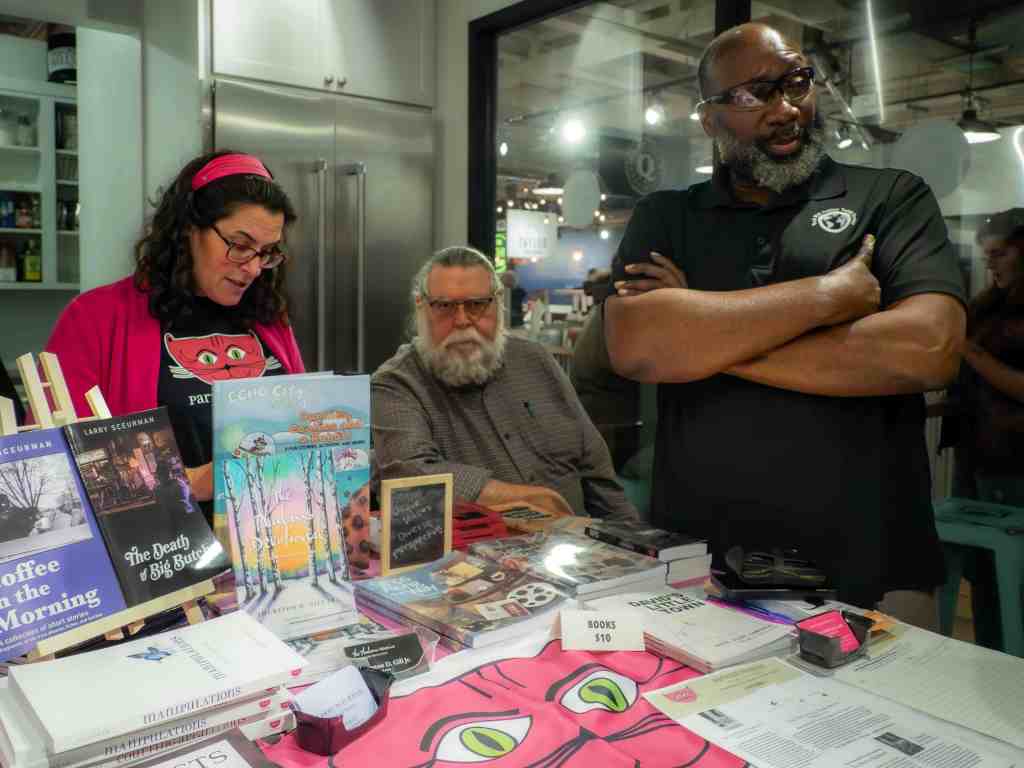
at the Easton Book Festival 2023
Angel’s introductory note: When I went to Sex Down South in Atlanta in early September, I drove the whole trip alone. I hadn’t traveled alone in 25 years, except for the occasional trip to D.C. While at the conference, one of the themes people talked about was safety.
In their context, they referred to their safety as sex workers and as people who may look or behave differently or have different beliefs than the people around them. In another way, organizers wanted participants to consider their personal safety and comfort when choosing activities and partners.
The experience– and listening to professionals talk about their experiences with stalkers and other threats– made me realize that I had adopted some habits and practices to protect my own safety as a disabled woman traveling alone, and this lead to a conversation with Thurston Gill, who in addition to his role as author of The Phulasso Devotional is a security professional, where we discussed this topic. I asked if he wanted to collaborate on a list of tips.
1. Financial Safety
– Use a dedicated travel bank account separate from your main household accounts to protect your primary funds. This way, even if your travel account is compromised, essential bills like your mortgage or utilities are not affected.
– Avoid using public Wi-Fi for financial transactions, as it’s often unsecured and can expose sensitive information. Instead, use your own cellular data or hotspot, which are more secure.
– Consider using a VPN (Virtual Private Network) to encrypt your internet connection for additional security. Apps like Delete Me, Been Verified, and Truth Seeker can help monitor and protect your online presence.
2. Resource Distribution (Cross-Loading)
– Cross-load or separate key items like cash, credit cards, and identification documents. For instance, keep emergency cash and another ID in a different location from your main wallet.
– Avoid storing both your driver’s license and passport in the same place. This way, if one is lost or stolen, you still have backup identification.
3. Pre-Trip Planning
– Research the safety and security conditions of your destination, including potential risks specific to the area and time of year.
– Share your detailed itinerary, including stopover points, with two or more trusted contacts who can check in if they don’t hear from you.
4. Situational Awareness
– Try to avoid exploring new places alone. If accompanied by someone familiar with the area, still perform a safety check to ensure you’re comfortable.
– Be aware of your surroundings and know how to navigate back. Research potential routes beforehand to avoid becoming lost and vulnerable.
5. Driving Safety
– Pre-plan all stops for fuel, restrooms, and food. It’s safer to avoid driving alone at night when fewer people are around to help in emergencies.
– Keep your gas tank at least half full. When stopping for gas, assess the area for any suspicious individuals or unsafe conditions. Lock your vehicle and be vigilant while pumping gas.
6. Communication
– Regularly check in with family or friends upon arriving and departing from each stop to keep them updated on your location and safety.
– Use offline messaging apps like Zello, FireChat, and Briar that work without a cellular connection as a backup. For extended travel, consider satellite communication devices or GMRS radios.
7. Vehicle and EDC (Everyday Carry)
– If not using a rental car, have a mechanic inspect your vehicle to ensure it’s in top condition for the trip. A roadside assistance subscription can be invaluable.
– Keep essential items (EDC) like keys, wallet, and emergency tools within arm’s reach. A bug-out bag with 72-hour survival supplies should be ready in case of an evacuation.
– Make sure you have non-perishable, high protein snacks and a bottle of water on you and all times. If you get stuck in traffic, in a storm, or have a break-down, you want to cover your own basic needs.
8. Social Media Caution
– Avoid sharing real-time updates of your location on social media, as this can make you a target if others know your movements. Post photos and details only after leaving a location.
9. Personal Protection
– Keep personal defense tools accessible both on your person and in your vehicle. Ensure you are properly trained to use them effectively and check for any legal restrictions in your travel areas.
– Place emergency activation devices like phone emergency buttons in accessible spots to call for help immediately if needed.
10. Intuition and Boundaries
– Trust your intuition; if something feels off, remove yourself from the situation. Intuition doesn’t require concrete evidence to act.
– Practice assertiveness in setting and maintaining boundaries, especially in unfamiliar places or with strangers. Use confident body language and verbiage to reinforce these boundaries if needed.
11. Spiritual and Mental Preparedness
– Engage in prayer, meditation, or other practices that strengthen your mental and spiritual resilience. This helps you remain calm and clear-headed in potentially dangerous situations.
12. Legal and Self-Defense Awareness
– Review the legality of any personal protection tools or self-defense items in the areas you plan to visit; laws vary widely and could impact what you’re allowed to carry.
– Self-defense training should focus on avoiding conflicts and building mental and emotional resilience rather than solely on physical techniques. After any violent encounter, report it to the authorities and document details to avoid being mischaracterized as the aggressor.
This detailed breakdown reinforces awareness, preparation, and practical safety measures to help ensure a safer and more secure solo travel experience.
 Parisian Phoenix Publishing
Leave a comment