
In my childhood, Frosties came in chocolate.
Then, in my 21-year-old daughter’s lifetime, they added vanilla.
But now, it seems they have this list of flavors that sound like a DQ married a Starbucks:
- Classic Chocolate
- Vanilla
- “Raven’s Blood,” in chocolate or vanilla
- Oreo Brownie Twist, in chocolate or vanilla
- Brownie Batter, in chocolate or vanilla
- Pop Tarts Strawberry Fusion, in chocolate or vanilla
- Caramel Crunch, in chocolate or vanilla
- Strawberry, in chocolate or vanilla
- Caramel, in chocolate or vanilla
- (and it looks like they no longer offer the coffee Frosty)
This led to a household discussion of decision fatigue, and the comment of one of our friends, in all earnestness, that “this is why I was depressed and suicidal.” Because our society has so many decisions that really don’t matter or “make a difference.”
And where in literature do we explore the meaninglessness of individual people and their decisions on the overall operations of society? Existentialism.
Existentialism
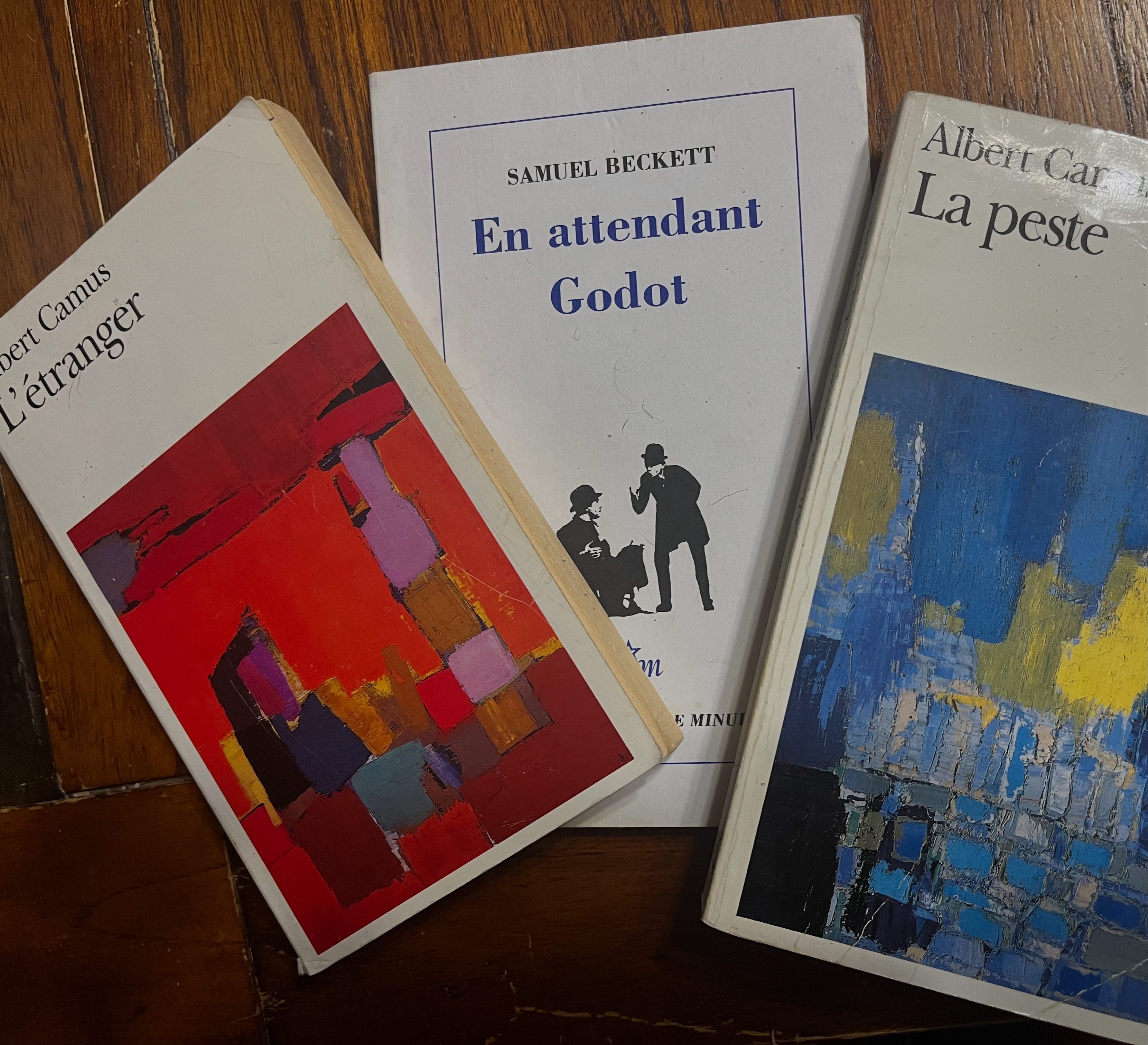
As someone with academic background in both English and French language and literature, and a keen interest in post-war 20th century history, I love the existentialists. After the Frosty/decision fatigue conversation, I dipped down the rabbit hole of the Internet to compile some “greatest hits” of Existentialism. I wanted to share them with the people in the Frosty discussion, but I realized some of my books aren’t even in English.
Now, I’m itching to read/reread some Existentialists now that I am fifty. Here is my list:
- Reread The Stranger, by Albert Camus. May cheat and read it in English.
- Reread the play Waiting for Godot, by Samuel Beckett. Have a copy in French.
- Reread The Metamorphosis by Franz Kafka. My daughter used to carry this book around as a toddler.
Now, online I found the following works or authors classified as Existentialists and would like to explore:
- I have read parts of, but not all— and after rewatching The Iron Giant, another great piece of 20th century angst— and have had an interest in The Bell Jar by Sylvia Plath. If you didn’t follow my logic with the cartoon-metal-giant-movie and a clinically-depressed poet, The Iron Man, a science fiction children’s story was originally published in 1968, was written by Ted Hughes. Hughes and Plath were married, and it is said that Hughes had an affair that contributed to Plath’s suicide, and that the Iron Giant’s commentary on souls are meant as a comfort to Plath and Hughes’ children.
- The Beautyful Ones are Not Yet Born by Ayi Kwei Armah. This novel takes place in 1960s, postcolonial Ghana. I have an interest in postcolonial Africa, typically Francophone countries, but this would allow me to dip into some former British colonies.
- Titles by Jean-Paul Sartre, Friedrich Nietzsche and/or Soren Kierkegaard.
But first, I have to finish Onyx Storm.
Have you read any of these Existentialist classics? Thoughts?
 Parisian Phoenix Publishing
Leave a comment