
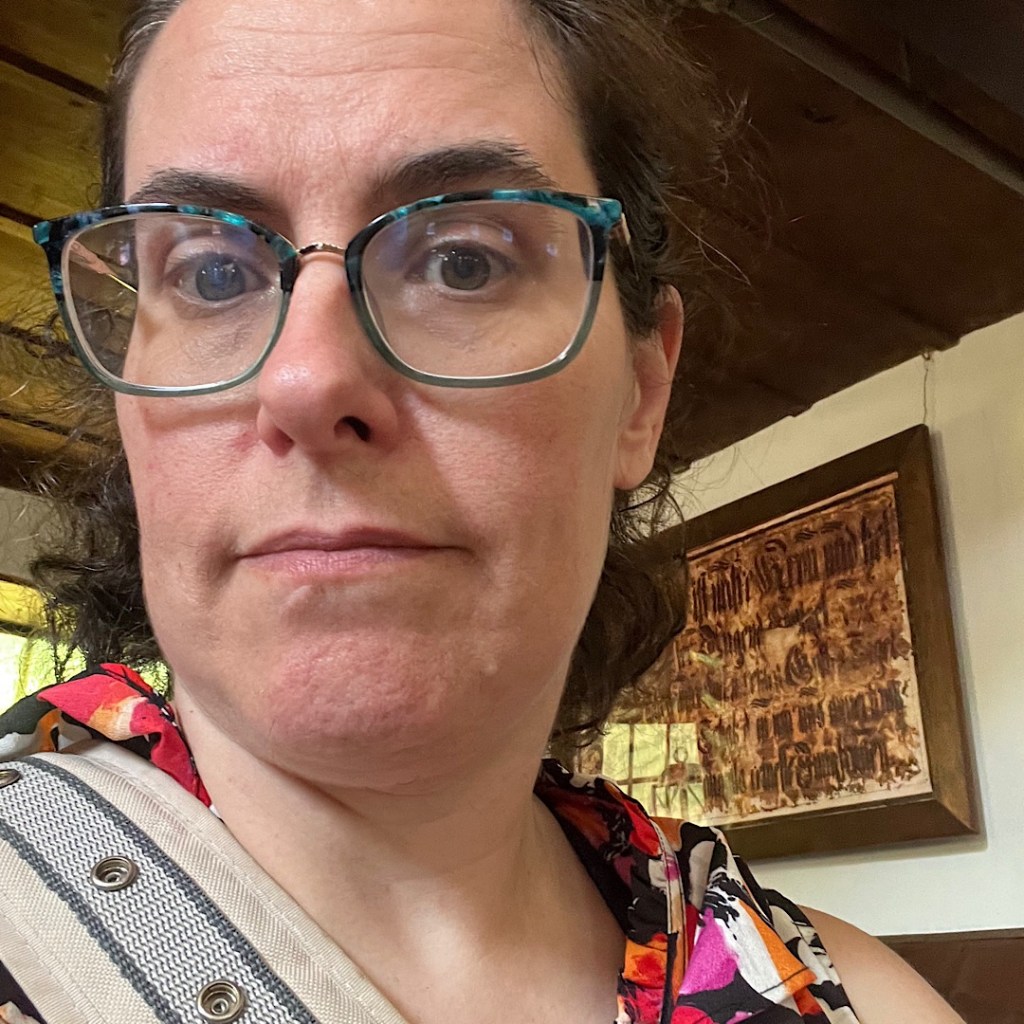
Art Director Gayle Hendricks and I visited the Ephrata Cloister yesterday, after a volkssport walk through the town.
The Cloister is known for its religious discipline, its colonial roots, and its history of printing and calligraphy.
Gayle has a love of all things printing and type. And the Cloister has restored works of music, art, and spiritual messages.
Apparently, according to the story told to us while enjoying a rest in the Meeting House (saal), the only printer in the region who had German type for the printing press was in Germantown, but his wife had left him to join the Cloister so he would not do work for the sect.
Therefore, they started their own printing press, and produced their own paper and ink. It’s important to recognize history– and book publishing has a long tradition.
The Fraktur art they practiced at the Cloister is explained as such:
The Brothers and Sisters at Ephrata Cloister were known for their German calligraphic art of Frakturschriften, often times shortened to the word Fraktur. This is considered the first of this folk art produced in America.

Conrad Beissel, the mystic who founded the Cloister, also had his own musical style, despite no formal musical training. Listen to some of these unique early American hymns (in German) here.
The Museum Store at Ephrata Cloister offers locally made traditional crafts including redware pottery, hand-woven textiles, tinware, glass, and wooden items inspired by originals in the historic collection. The artwork for which Ephrata became famous is represented with original watercolors, prints, calligraphy, and paper cuttings.
If you enjoy reading, or just looking at the pictures, a stop in the Shady Nook Book Corner is a spot not to miss. Name for the home of the last Cloister residents, the Shady Nook holds a long list of titles keeping alive the printing heritage begun by the Brotherhood in the 1740s.
I did not anticipate the amount of Pennsylvania Dutch history in the gift shop. You can read more about why that’s important to me in my personal blog entry on the trip.
To learn more about the Cloister, click here.
To learn more about our personal adventures in Ephrata, click here. (You’ll also find more photos from both the town and the Cloister.)


 Parisian Phoenix Publishing
Leave a reply to Angel Ackerman Cancel reply