
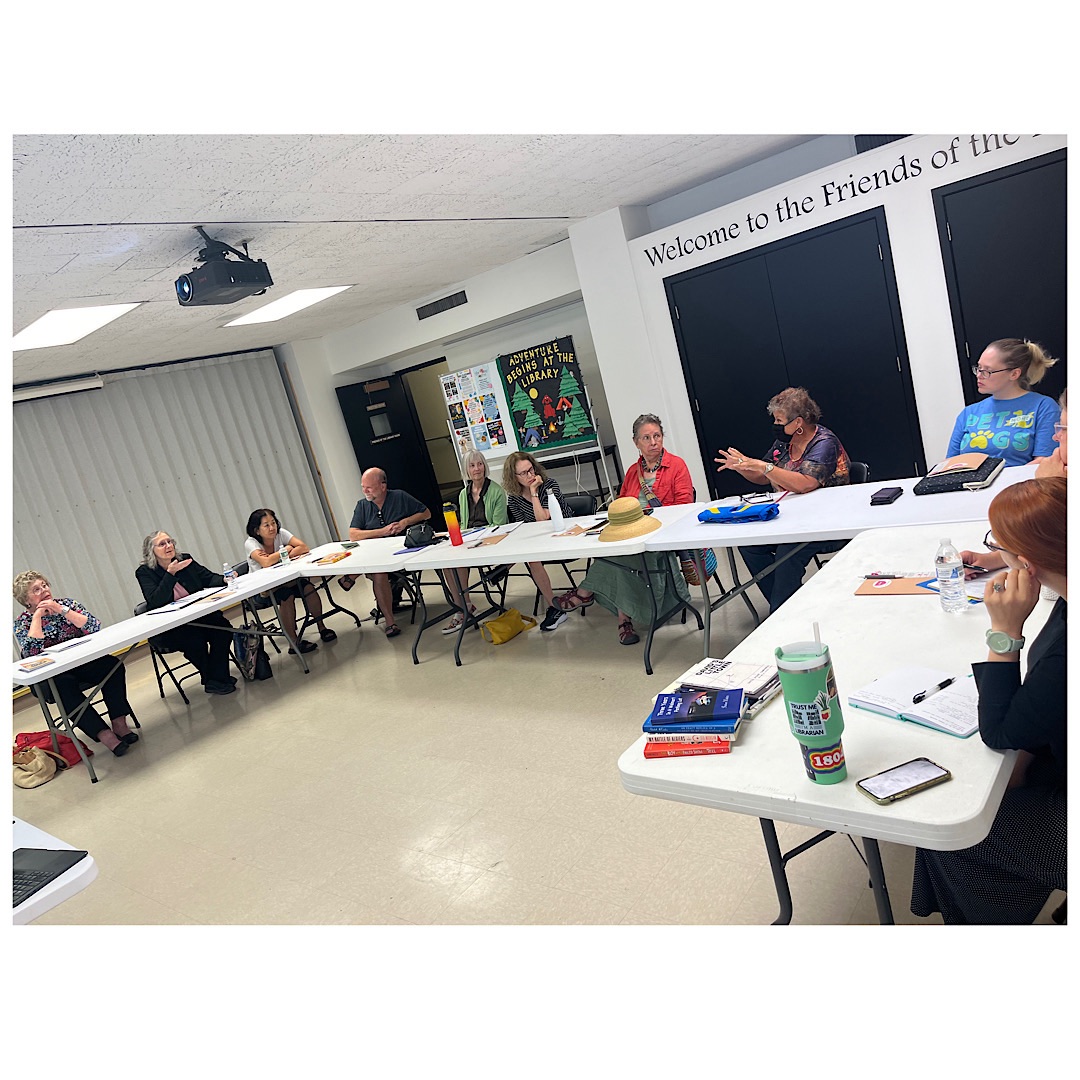
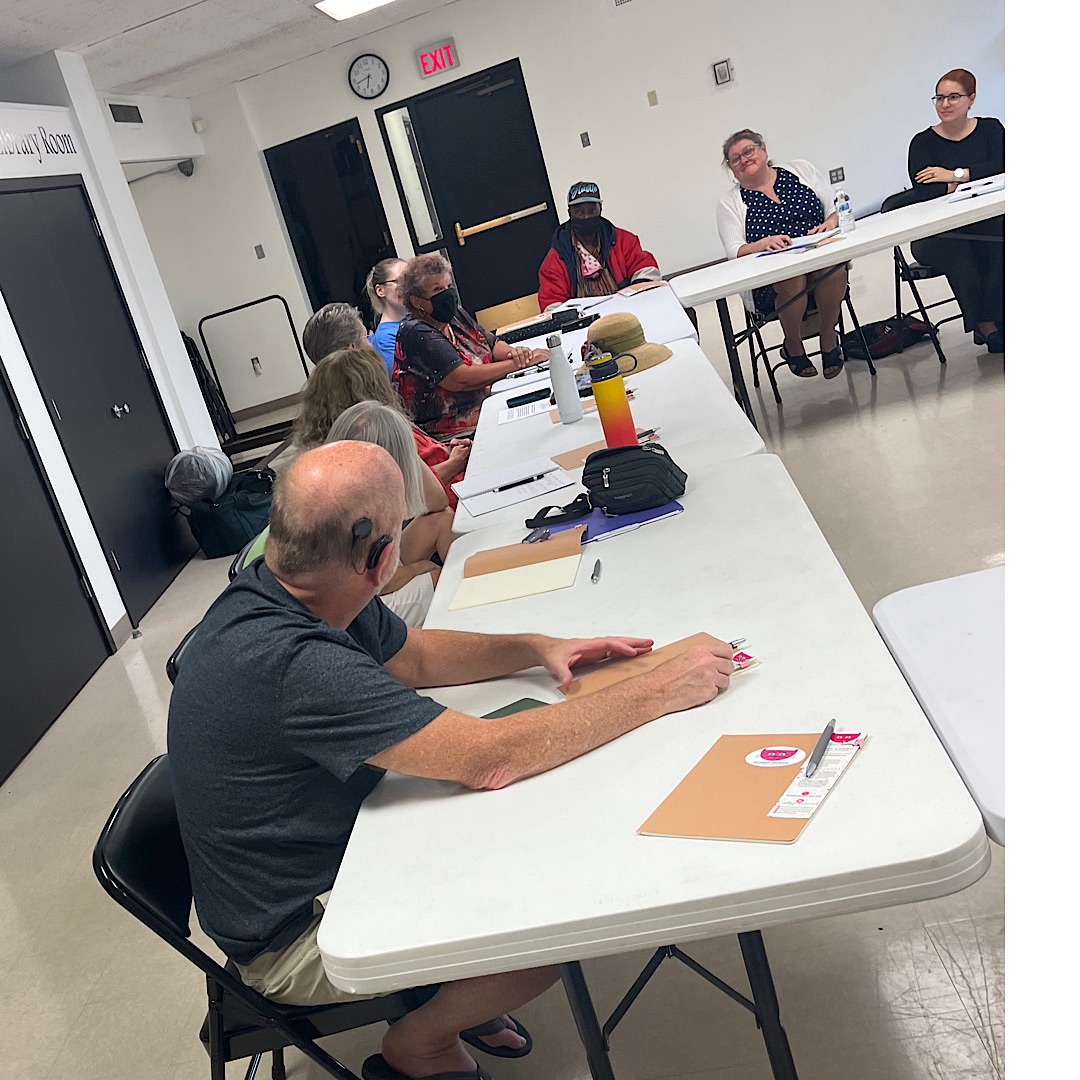
Through the Arts Community of Easton, I had the opportunity to present a workshop on memoir Monday July 8 at Easton Area Public Library.
The workshop was limited to 10 people so that gave me a very intimate space where I could learn about my participants and hopefully create a welcoming space.

(So if any of you reading this attended Monday’s workshop, feel free to leave feedback in the comments.)


One of my goals when facilitating any workshop is to motivate people and alleviate their fears. In my opinion, fear often proves the biggest barrier to completing projects or trying new things. We think too much and look at our work and think that it’s just not good enough.
If anything, I remind people to have fun and not take the details to seriously. And yes, I’m referring to writing.
When we get hung up on structure, grammar, purpose or other things, we prevent ourselves from finishing. No matter what your first attempt looks like, it can be fixed, but if you never finish, you can’t evaluate it nor can you fix it.

To me, it’s really important to give people permission to embark on their own journeys and not get lost in the feelings of whether or not you are good enough. You can always learn. You can always fix it. And if you’re passionate, you can use your enthusiasm to find the people who can help you.
I think our society puts too much pressure on being the best– and you can’t always be the best. And you can’t even try to be the best without support.
In my talk, I used the following memoirs as examples of storytelling styles:
- Jordan Sonnenblick, The Boy Who Failed Show and Tell and The Boy Who Failed Dodgeball, for his masterful use of middle-grade storytelling to chronicle specific periods in his life. He hones in on specific time– a school year which is appropriate for his theme and his audience.
- Ted Morgan, My Battle of Algiers, for showing that a war memoiring showing the evils of colonialism and the torture the French inflicted upon the Algerians can be told side-by-side with lots of sex and alcohol.
- Elizabeth McCracken, An Exact Replica of a Figment of My Imagination, for its beautiful weaving together grief and hope in a story about pregnancy loss AND birth after miscarriage.
- Marie Killilea, Karen, because her intent for the book was to showcase how she helped her daughter with cerebral palsy, but in doing so, the book may be seen as a mother’s memoir.
- Sharon Waters, Three Years in a Walmart Parking Lot, it’s self-published and completely chronological and very basic writing. But you invest in the story because we want to hear about how she managed to live in an RV for three years with no true knowledge or preparation.
- Albert Camus, The First Man. This is the unfinished last novel of Camus, but the story coincides with his life. It reads as if he merely changed the names. We may never know what events are completely true and which have fictional twists, but know there are clear parallels.
AND I mentioned some of our Parisian Phoenix authors and how they tell personal stories. I specifically cited:
- Our Not an Able-Bodied White Man with Money anthology, for its use of short essays, poetry and art to express personal stories.
- Steven Hymovitch‘s The Emotionally Intelligent Dental Office, for his use of his personal experience in the form of a business and psychology book.
- Larry Sceurman‘s The Death of Big Butch and Coffee in the Morning, for how he fictionalizes personal experience.
- Ralph Greco Jr.’s Writing Dirty Words, for how it combines his writing advice with personal experience stories of how he used techniques in his own life.
- Twists: Gathered Ephemera by Darrell Parry, for its depiction of everyday moments in poetry.
- and of course, David’s Little Town, because it is a straight-up memoir.
At the end of the month, I will be hosting another workshop on writing non-fiction focusing on clarity and aimed at beginners. That workshop will be Tuesday, July 30, also at 6:30 p.m. at the main branch of the Easton Public Library. Register here.
 Parisian Phoenix Publishing
Leave a comment