
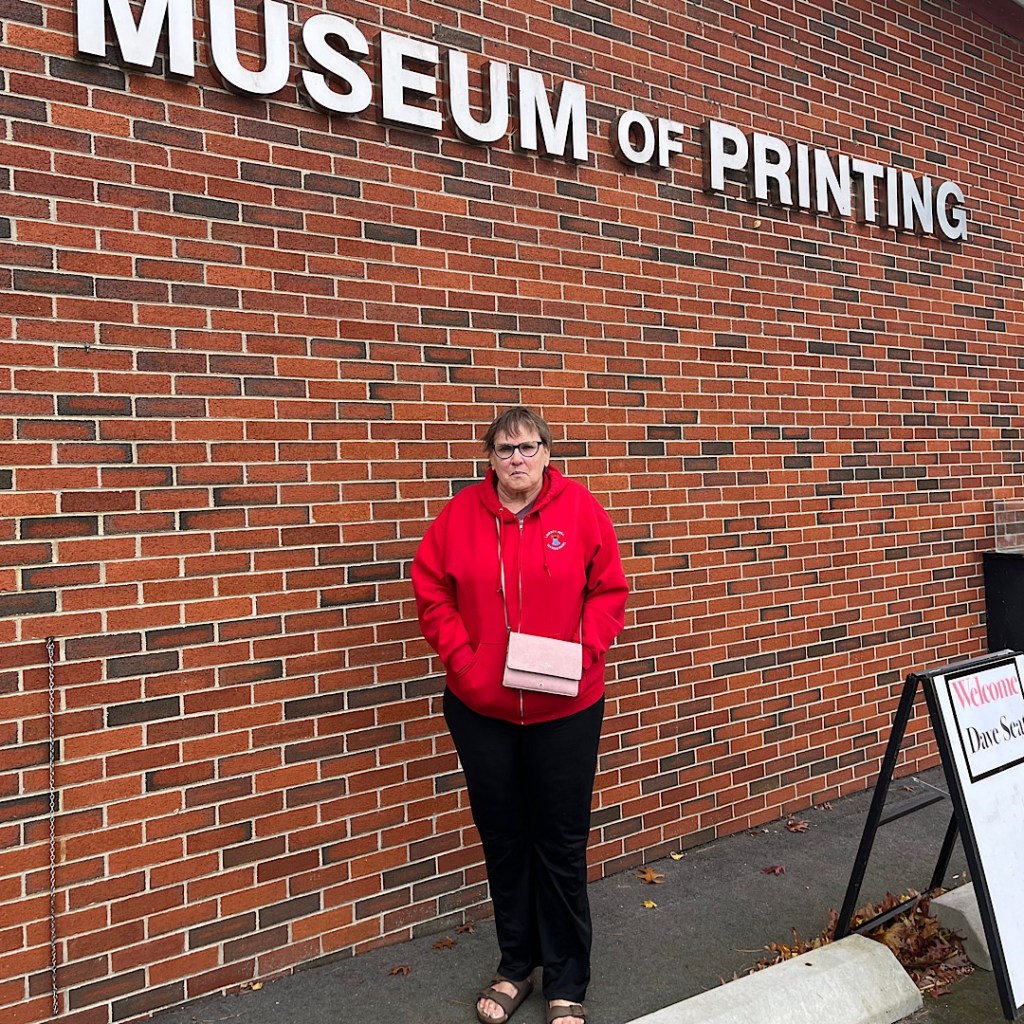
I did not anticipate that it would be so hard to write about my visit to the museum of printing.
I did not expect to rave about the Museum of Printing. Printing, and the history of, is a fairly eclectic interest. I knew I would not be bored at the Museum of Printing, but I did not expect to enjoy the Museum of Printing.
I had a fairly reasonable career in print journalism and some experience in non-profit and corporate communications that involved work with publications. That’s how my art director and I originally met– one word professional and one graphic artist existing in a world transitioning from mechanical to digital print.
On the day we visited the Museum of Printing in Haverhill, Mass., (yes, it’s about 315 miles from our Pennsylvania home base), they were hosting an all-day workshop on fabric printing. They are only open on Saturdays.
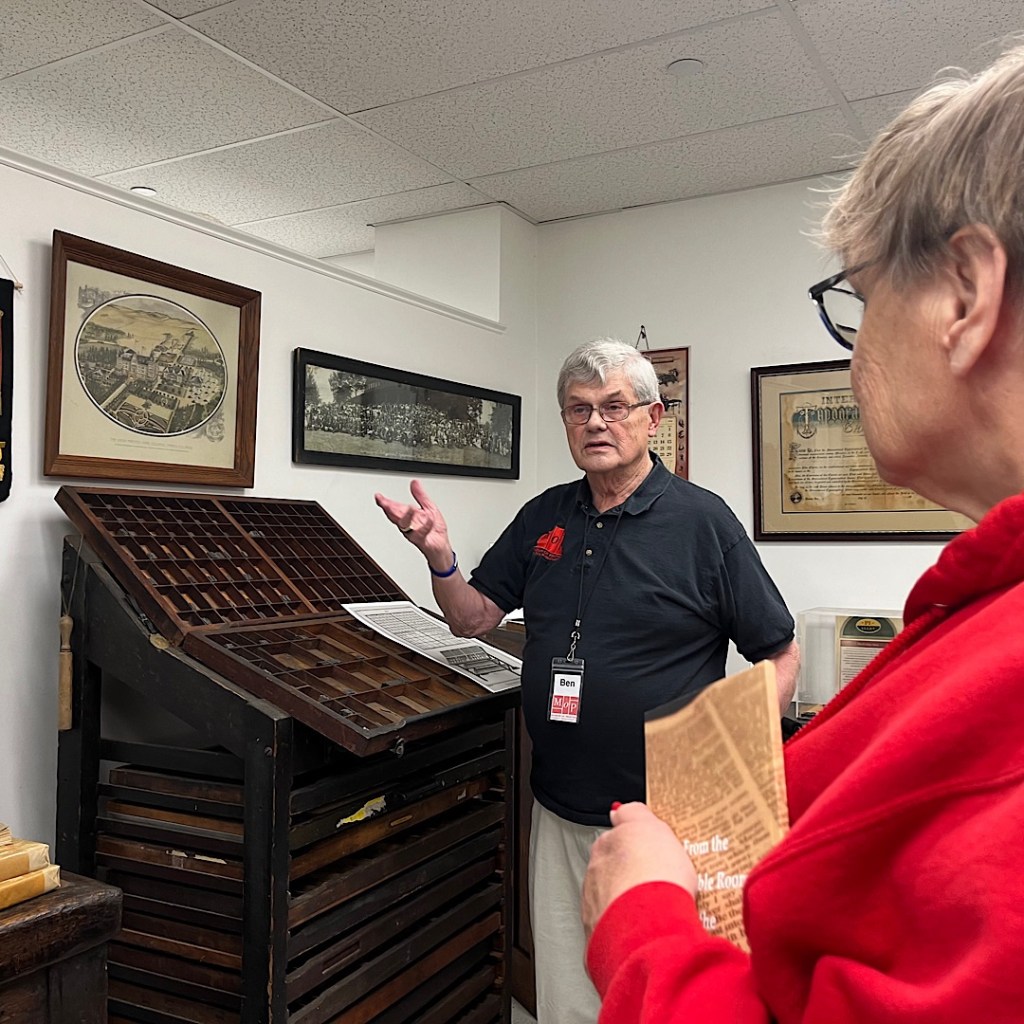
The volunteers at the museum–at least the ones we met– are all retired from the printing industry and very knowledgable. Gayle, with her background in commercial printing, has used most of the technology on display and with her academic specialty with type and print, knew most of the items in the building. I have experienced much of what they have in the collection, but many of the items I had a basic understanding of but had never seen in action because I was always on the writing end, not the production end.
Our group on the day of our visit included Gayle and I, a first semester graphic design student and a man interested in book binding.
To see so much printing history and technology packed into a relatively small space was amazing, and really allowed someone to see how everything interacted, not only how the technology developed but how much skill and precision were lost as we moved into digital technologies.
Spot Color
It led into a discussion between Gayle and I about how I wish we still did spot color. Spot color, for those who don’t know or don’t remember, is when you used one color in your publication (other than black).
Gayle was saying the print shops often had specials when you could get significant savings if you ran the job when they featured that color. So, on red day, various clients who wanted to run red would submit their jobs and the press operators wouldn’t have to change the ink between clients. They just ran red all day.
Why would I miss something as boring as spot color?
It forced designers to make choices about how to most effectively use color. And I think, in our correct “color is cheap” world, young designers don’t have to think about the best use of color and they certainly have no reason to embrace simple, clean design.
How a newspaper was printed
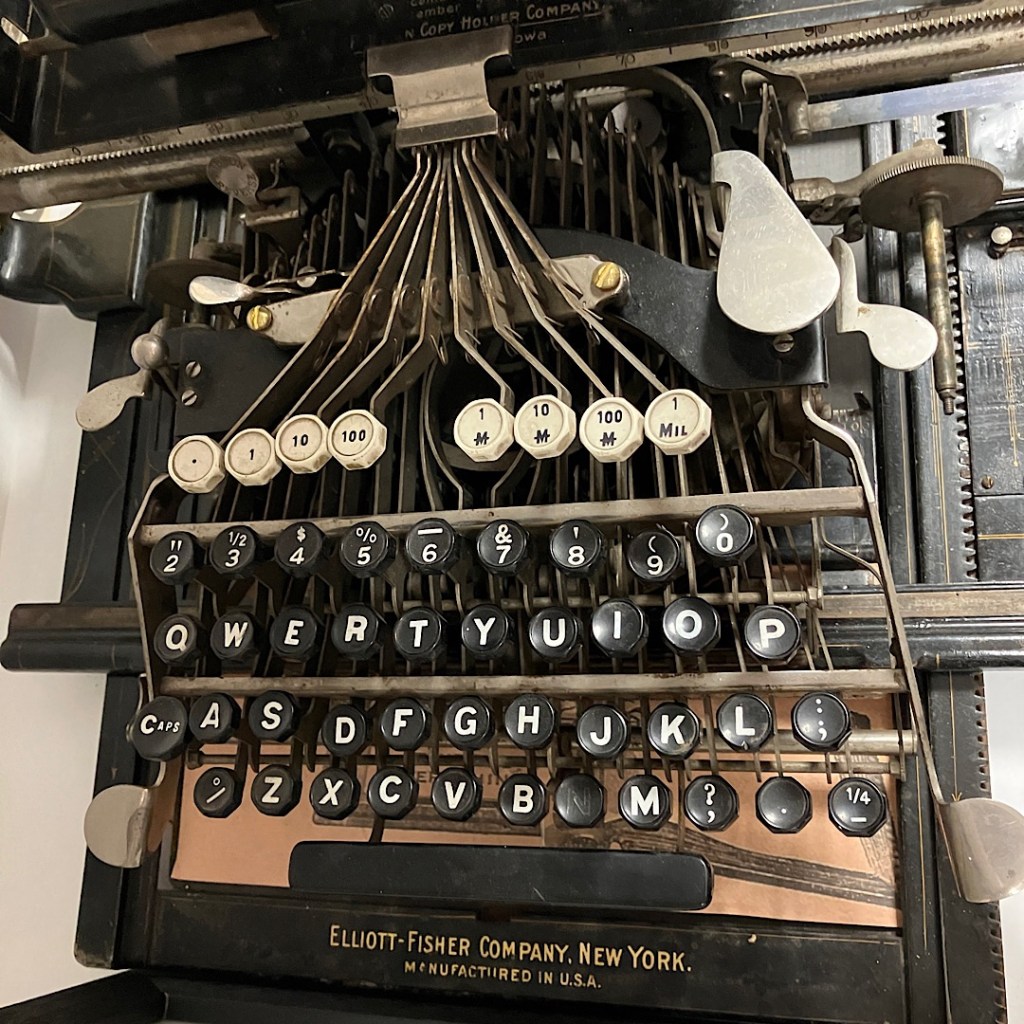
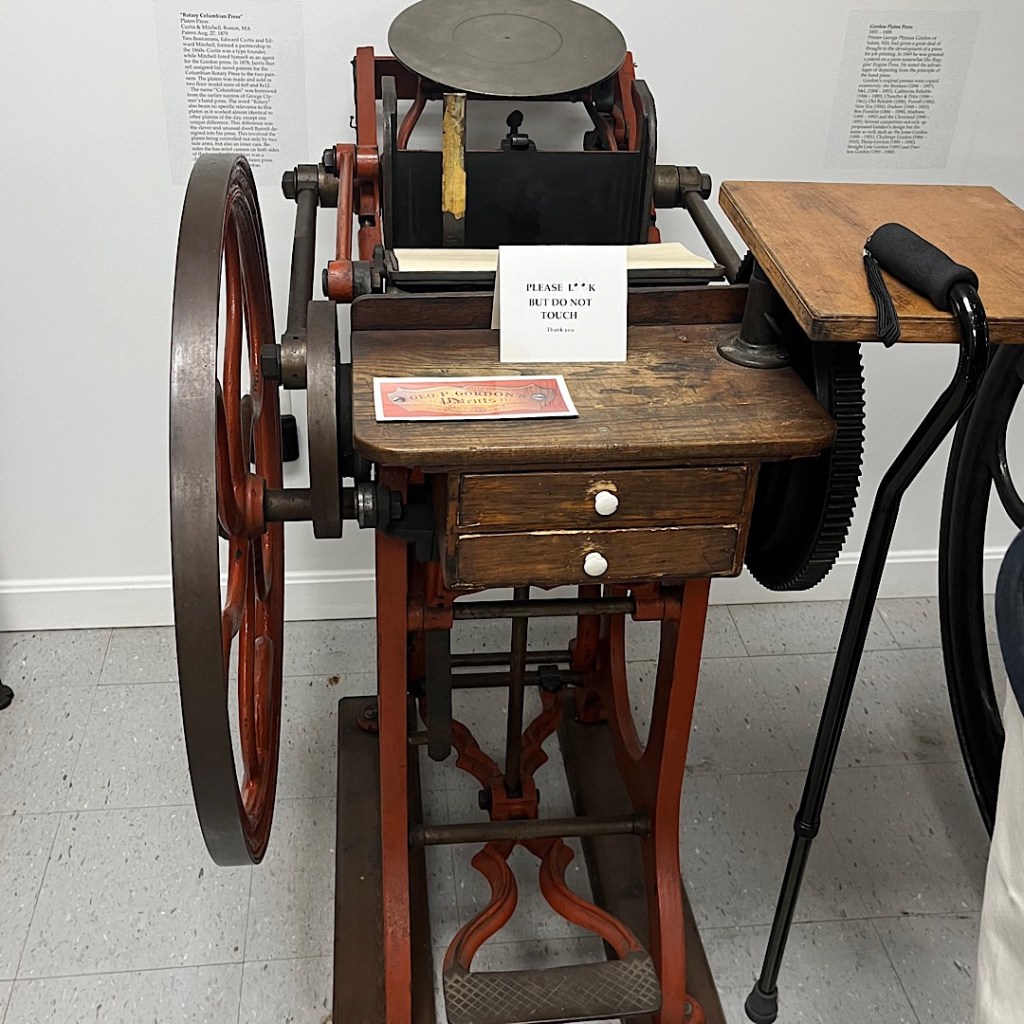
The flow of the museum introduces you to the basics as well as displays some specialty items. From the wall of typewriters to the Hell Chromagraph, there’s a lot happening. They even have a Lisa computer– which was the predecessor to the blocky Macintosh computers many elementary schools had in the mid-to-late eighties. And the first Xerox machine looked like a big metal desk and was prone to fires if the paper jammed.
But if you paid attention during your visit, and listened to the tour guide carefully, you learned the origins of printing, where a lot of our word-related language comes from, and how a newspaper gets printed. And it’s all fascinating!
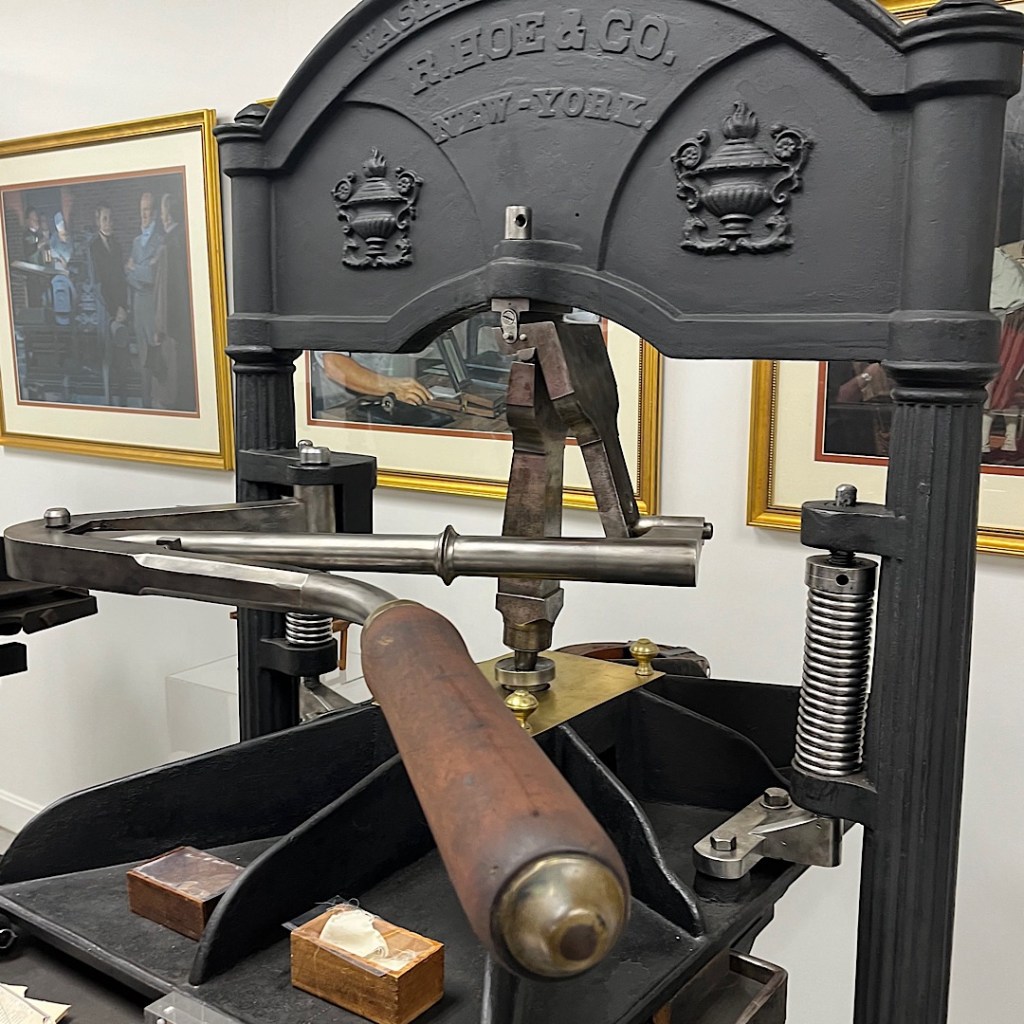
“Modern” printing traces its roots to the Gutenberg Bible. Johannes Gutenberg wanted to bring Bibles to the masses to end the power of the clergy regarding how religion would be formed and interpreted. Gutenberg began his work in the late 14th century– that’s almost 700 years ago– and without his efforts to put Bibles in the hands of the people (without the hand copying by the monks) we never would have experienced the Protestant Reformation two hundred years later.
And without this religious impetus, we might never have had movements to promote literacy among the masses. And literacy led to a desire for information, which led to news.
The process of organizing word or metal letters backwards onto plates that would reverse and print in an order that could be read lead to terms like “Uppercase” and “Lowercase” where the letters physically rested when they weren’t in use.
And watching the presses get bigger over time leading to our modern newspapers was fascinating. The first newspapers came out weekly because they didn’t have enough time or staff to set articles every day. That’s what made the New York Times so impressive– that they put out 12 pages of news every day (and if you look at those old newspapers (which you can at the museum) a lot of the print was tiny. People had to place those tiny letters in sequence.
That’s why the linotype machine meant so much– it could do the work of ten typesetters, dropping the type in line.
And then to see the progression to color printing… and the entrance of computers into the sphere. It’s really fascinating to see how much printing created our culture of the written words.
And if you want to be more hands on– they sell refurbished typewriters and small printing presses in the gift shop.






 Parisian Phoenix Publishing
Leave a reply to Ms Hendricks Cancel reply